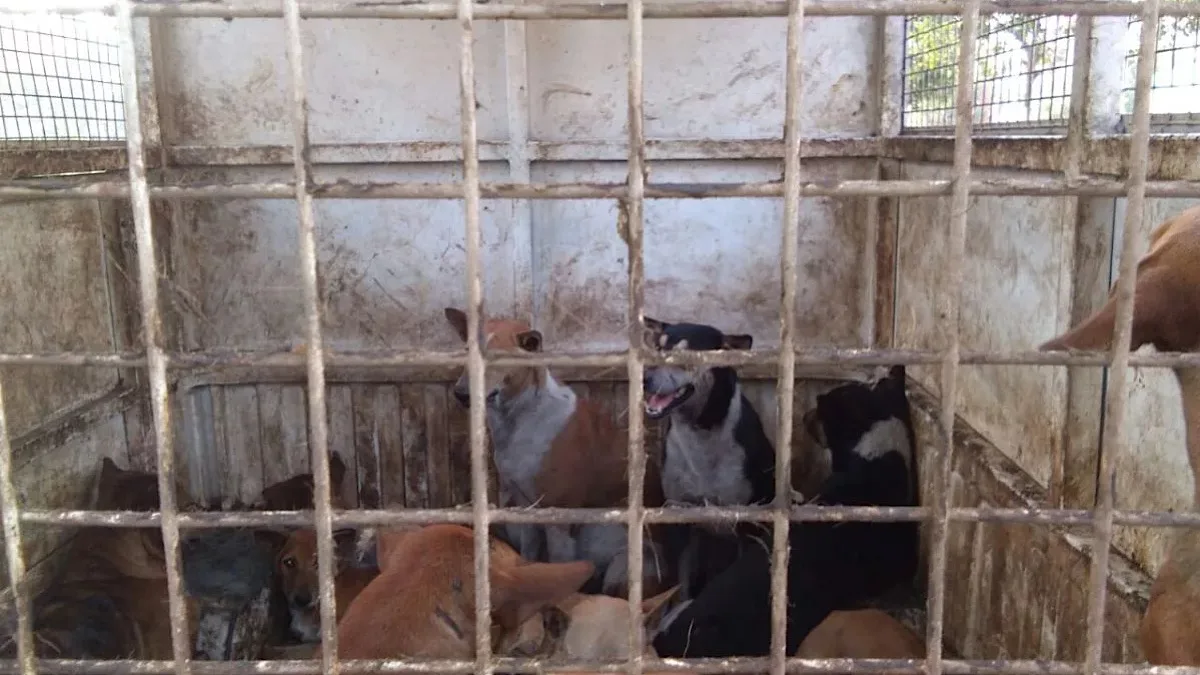
Delhi’s streets are not just crowded with vehicles and people; they are also home to a vast population of stray dogs that have long been part of the city’s landscape. For some, these animals are companions in need of care, for others they are a source of daily anxiety. Recent legal interventions have sharpened this divide, leaving residents caught between compassion and fear. Feeding community dogs has always been a quiet act of kindness. From tea stalls that leave out scraps to residents who carry food in their bags, such gestures have ensured survival for countless strays.
Caregivers often go beyond feeding; they help identify dogs for vaccination and sterilisation, ensuring that programmes to control numbers are implemented effectively. In many neighbourhoods, these individuals are the bridge between civic authorities and the dogs themselves. Yet the growing number of reported dog bites has changed the tenor of the conversation. Families worry about children being chased on playgrounds, senior citizens fear sudden attacks during morning walks, and residents complain of unsanitary conditions near feeding spots. The sheer scale of the problem ~ millions of cases of dog bites reported nationwide last year ~ cannot be brushed aside.
Advertisement
To dismiss these concerns as mere prejudice would be to ignore legitimate questions of public safety. The law has tried to carve a middle path. Stray dogs are not to be rounded up and caged en masse, but rather sterilised, vaccinated, and returned to their localities. Aggressive or rabid dogs must be sheltered separately. Feeding in public spaces has been restricted, with designated areas to be identified. On paper, this seems like a workable compromise. In practice, however, ambiguity has bred hostility. Many residents now assume feeding strays is banned altogether, and caregivers face harassment, sometimes even violence, from neighbours. What is missing is not law but clarity, resources, and dialogue. Delhi has a network of sterilisation centres, but they are overstretched and underfunded. Shelters run by charities are perpetually short of space.
Municipal bodies, meanwhile, have been slow in marking safe feeding zones, leaving both feeders and residents in limbo. In the absence of coordination, suspicion festers: caregivers are seen as reckless, while residents are painted as cruel. A sustainable solution demands cooperation. Civic authorities must accelerate sterilisation drives and provide clear, accessible information about feeding rules. Resident welfare associations should work with caregivers rather than against them, identifying safe corners for food distribution away from gates, lifts, or children’s play areas.
Above all, the state must acknowledge that coexistence, not elimination, is the only humane and effective path forward. Delhi’s debate over strays is not a battle between dog lovers and dog haters. It is a test of whether a city of millions can embrace compassion without compromising safety. The choice is not between people and animals, but between chaos and order. With structure, funding, and mutual respect, coexistence is possible ~ and urgently necessary.